

 Feed back
 Privacy Policy
Cosmic Insights India
It was supposed to be a good match. Priya Iyer, 29, senior product manager at a fintech unicorn in Bengaluru, had cleared every checkpoint: caste alignment, financial stability, family reputation. Then came the final question from the groom’s mother during the *milni*: "Now that you’re getting married, when will you leave your job?" Priya paused. When she replied, "I don’t plan to," the room froze. Within 48 hours, the alliance was called off—not by the family, but by Priya herself. By January 2025, her LinkedIn post about the incident had been shared over 27,000 times. This wasn’t just rejection. It was revolution.
This moment captures the quiet but seismic shift reshaping one of India’s oldest institutions: arranged marriage. No longer a passive rite of passage, it has become a negotiation table where modern Indian women are demanding equity, voice, and above all, marital independence. They aren’t rejecting tradition—they’re rewriting it. And they’re doing so not in isolation, but as part of a broader cultural recalibration between ambition and belonging.
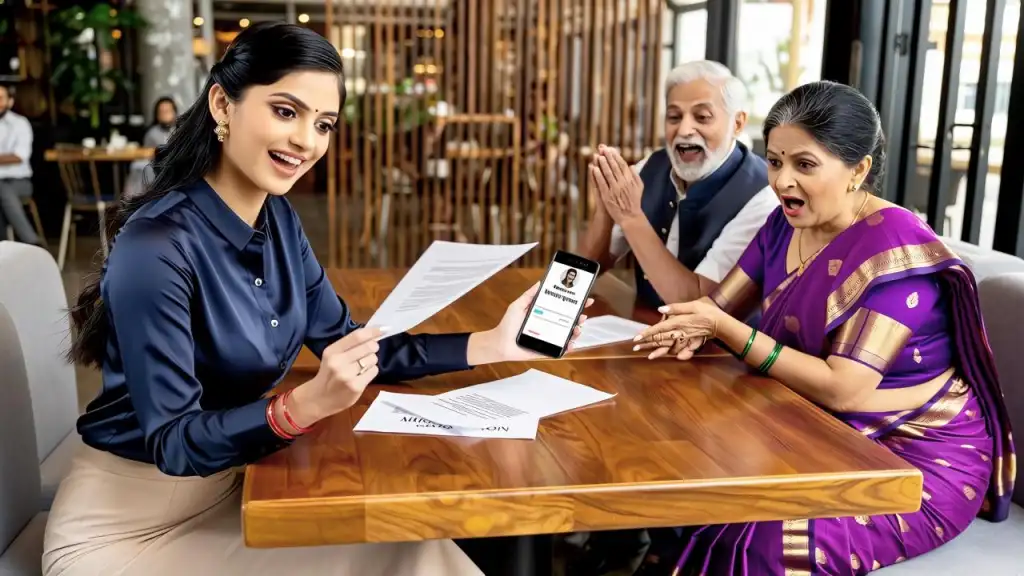
Priya’s story isn’t rare—it’s representative. In 2025, over 63% of urban, college-educated Indian women aged 25–35 are either delaying marriage or actively filtering out proposals that demand career sacrifice, according to a National Council of Applied Economic Research (NCAER) survey. What makes this generation different isn’t just access to education or jobs; it’s the expectation of agency.
For decades, arranged marriage functioned under unspoken rules: the woman moves, compromises, adapts. Her value was often measured by her willingness to dissolve into the joint family structure. But today’s modern Indian women—many raised during India’s tech boom, exposed to global ideas via digital media, and financially self-reliant—are treating matrimony like any major life decision: data-informed, boundary-aware, and non-negotiable on core values.
Dowry may be illegal, but subtle economic coercion persists—and now it targets careers instead of cash. A 2024–25 National Family Health Survey (NFHS-6) pilot study in six metro cities found that 28% of professional women reported being asked to resign or downscale their roles post-marriage. Among those who refused, 61% faced familial pressure; 17% experienced outright threats of divorce within the first two years.
But here’s the twist: these pressures are backfiring. As more women gain financial autonomy, the leverage shifts. Consider Meera Chandrasekhar, a radiologist in Chennai who turned down three "excellent matches" because each prospective husband expected her to relocate to smaller towns with no peer network or career growth. "I didn’t say no to marriage," she told *The Hindu* in early 2025. "I said no to becoming invisible."
Imagine arranged marriage as a startup facing disruption. To survive, it must pivot. That’s exactly what’s happening.
Families once saw daughters as liabilities to be settled. Now, many see them as assets—network builders, income generators, even status symbols. A 2025 report by McKinsey India noted that grooms’ families increasingly highlight the bride’s qualifications in wedding invites. One invitation from Ahmedabad listed the bride’s PhD in AI before her father’s job title. Subtle? No. Symbolic? Absolutely.
Here’s a counterintuitive truth: many parents want ambitious brides—for their sons.
Why? Because they know their sons can’t afford weak partnerships. With housing prices soaring and nuclear families becoming normative, dual incomes aren’t luxury—they’re survival. A 2025 Nielsen study found that 72% of upper-middle-class parents in Tier 1 cities now prefer a working daughter-in-law, citing financial resilience and social prestige.
Meet Dr. Ayesha Khan, 34, head of neurology at Apollo Hyderabad—and happily married for five years. Her husband, also a doctor, handles school drop-offs three days a week. They eat dinner together four nights a week. They vacation alone twice a year. Is it easy? "No," she says. "But we treat marriage like a partnership, not a performance."
Or consider Riya Malhotra, founder of a sustainable fashion brand in Mumbai, who negotiated a prenup that includes clauses on creative ownership and business succession. "My husband didn’t flinch," she says. "He said, ‘You built this. Of course it stays yours.’"
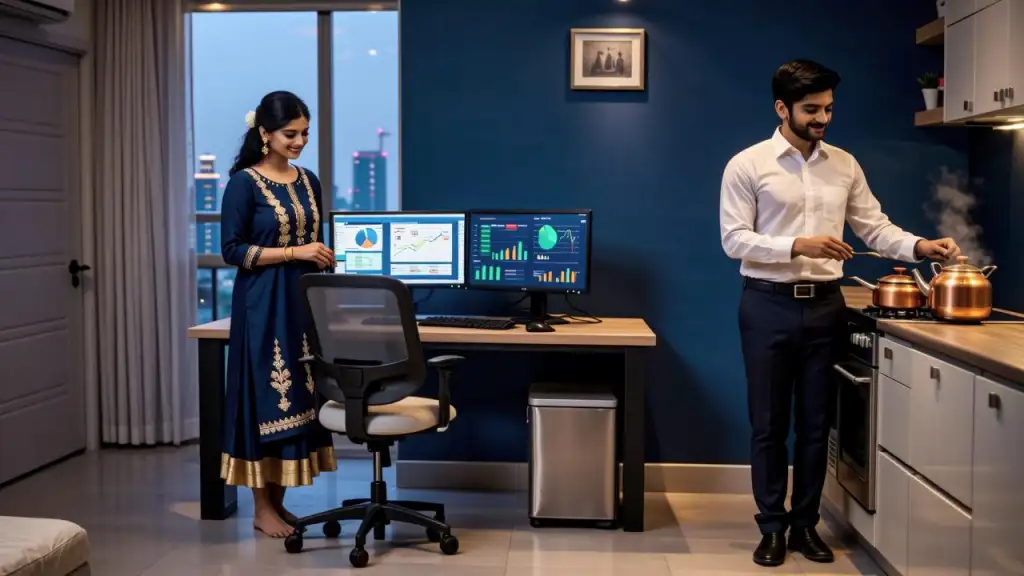
We obsess over work-life balance. But what women truly crave is decisional sovereignty.
Can you say no to moving cities? Can you invest in yourself? Can you walk away if things go wrong?
In 2025, marital independence means:
So, is arranged marriage dying? Hardly. It’s being rebooted—with firewalls against coercion, updates for equality, and patches for emotional safety.
Modern Indian women aren’t rebels tearing down temples. They’re architects redesigning homes—stronger, smarter, more livable.
【Disclaimer】The content regarding Modern Indian Women Challenging Arranged Marriage Traditions is for reference only and does not constitute professional advice. Readers should make decisions based on their circumstances and consult qualified professionals when necessary. The author and publisher disclaim any liability for actions taken based on this content.
Ananya Desai
|
2025.11.21


